
Concrete Sidewalks in Lake City, FL
Lake City Concrete Services installs and replaces concrete sidewalks for homeowners across Lake City and Columbia County. Safe, level, and built to last through Florida's weather year after year.
25+
Years Serving Lake City
550+
Projects Completed
4.9
Average Star Rating
A Safe Path From the Street to Your Front Door
A concrete sidewalk does one job, and it needs to do it reliably. It gets people safely from one point to another, whether that is from the street to your front door, from your driveway to a side entrance, or across your yard to a detached garage or outbuilding. When a sidewalk is level, clean, and in good condition, nobody thinks about it. When it is cracked, uneven, or heaved up by tree roots, it becomes a daily inconvenience at best and a genuine safety hazard at worst.
Lake City Concrete Services installs residential concrete sidewalks built to the correct width, thickness, and slope for safe and comfortable use. We work with homeowners who are replacing sections of existing walkway that have deteriorated beyond repair, installing new paths where there were none before, or upgrading from stepping stones and gravel to a proper poured concrete surface. Every sidewalk we install is built to handle foot traffic, Florida's heat and rain, and the tree root pressure that is a reality for most residential properties in Columbia County.
When a Sidewalk Becomes a Problem Worth Solving
Sidewalk deterioration tends to happen gradually, which is part of why homeowners put off addressing it longer than they should. A small crack here, a slightly raised edge there, and before long the entire walkway is a patchwork of repairs and problem spots that no longer function the way a sidewalk is supposed to.
Tree roots are one of the most common causes of sidewalk failure in Lake City yards. As roots spread outward in search of water, they push up against the underside of the slab with significant force. A section that was level last year can develop a raised edge of an inch or more within a single growing season. That raised edge is a trip hazard every single time someone walks across it, and it does not get smaller on its own.
Uneven sidewalk sections also create drainage problems. When sections tilt or drop, water pools in the low spots and sits rather than running off. In Florida's rainy season, a sidewalk with poor drainage stays wet for extended periods, which accelerates surface wear and encourages moss and algae growth that makes the surface slippery. Left long enough, a sidewalk in this condition becomes a liability that affects both the safety and the appearance of your property.
How We Install Your Sidewalk
Every sidewalk installation starts with removing the existing material if there is any. Old concrete gets broken up, hauled away, and disposed of properly. If tree roots were a contributing factor to the damage, we address the root situation before pouring new concrete so the same problem does not reappear in a few years. This might involve cutting back exposed roots, installing a root barrier, or recommending a slightly adjusted path that routes around significant root systems.
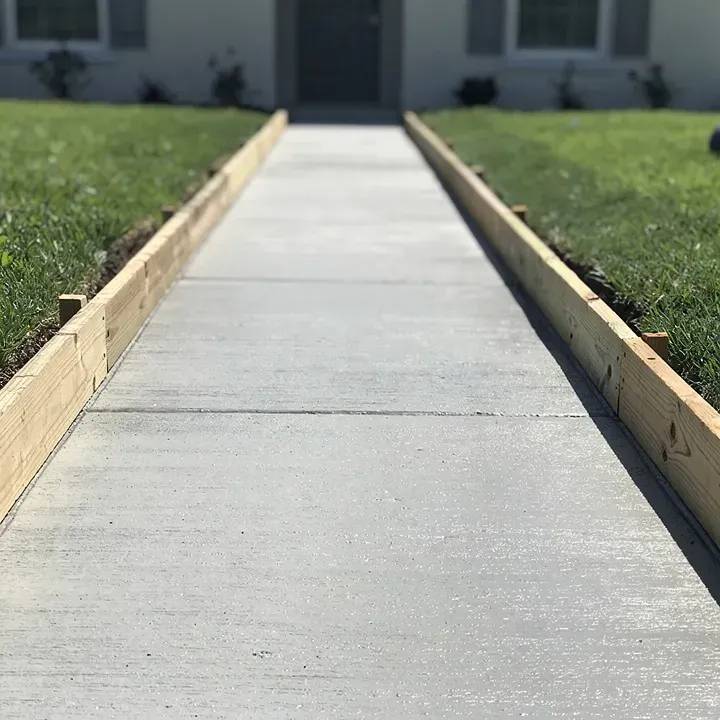
With the area cleared, we excavate to the correct depth, build up the base with compacted material as needed, and set the forms to define the width and edges of the new walkway. Slope is confirmed at this stage to ensure water runs off the surface and away from any adjacent structures. We then pour the concrete to the correct thickness, typically four inches for standard residential foot traffic, and finish the surface with a broom texture that provides grip underfoot in wet conditions. Expansion joints are placed at regular intervals to allow the concrete to move with temperature changes without cracking through the slab body.
Before we leave the job site, we walk you through the curing timeline and let you know when foot traffic can safely resume. New concrete needs time to reach its full strength, and we make sure you have clear guidance on how to treat the surface in the first few days.
What Affects the Cost of a New Sidewalk
Sidewalk pricing depends on a handful of variables that differ from one property to the next. Length and width are the most straightforward factors, as they determine the total square footage of concrete required. A standard residential sidewalk is typically three to four feet wide, though wider paths are common for main entries and high-traffic areas and are priced accordingly.
Demolition and removal of the existing walkway adds to the cost if there is old material to take out. Properties with significant tree root issues may require additional base preparation work or root management before the pour, which affects the overall scope and price. The condition of the soil beneath the existing walkway also matters. Sandy or soft soil that has shifted unevenly may need to be excavated deeper and filled with compacted base material before the forms go in.
Finish type is another consideration, though most residential sidewalks use a standard broom finish for practical reasons. A broom finish provides the grip needed to walk safely on a wet surface, which matters in Florida where rain is a daily reality during the summer months. Decorative or smoother finishes are available for homeowners who want a specific look, and we discuss all of the options during the estimate so you can make an informed decision before any work begins.
Frequently Asked Questions
What do you do about tree roots that damaged the old sidewalk?
Tree roots are one of the most common causes of sidewalk damage we deal with in Columbia County, and simply pouring new concrete over the same area without addressing them guarantees the same problem will return. Depending on the situation, we may cut back exposed surface roots, install a root barrier between the tree and the new slab, or suggest a slightly adjusted path that routes around the root system. We assess the root situation as part of our site evaluation and recommend the approach most likely to keep the new sidewalk intact long term.
How wide should a residential concrete sidewalk be?
For a standard residential walkway, three to four feet is the typical width and works well for most front entry and side yard paths. Main entry walkways that see more regular traffic or need to accommodate two people walking side by side comfortably are often done at four feet or wider. If the path will need to accommodate a wheelchair or mobility aid, we recommend a minimum of four feet to meet accessibility guidelines. We discuss width options during the estimate based on where the sidewalk is going and how it will be used.
Can you match the look of my existing sidewalk or driveway?
We can get close in most cases. Concrete naturally varies slightly in color depending on the mix, the water content, and the curing conditions on the day it is poured. A new section poured next to an older one will typically look slightly different at first, but the color difference tends to even out over time as the new concrete weathers and settles. We use consistent finishing techniques to match the texture of adjacent surfaces as closely as possible.
Ready to Get Your Concrete Done Right?
Whether you are dealing with a cracked driveway that has been bothering you for too long, planning a new patio, or starting a build that needs a solid foundation, Lake City Concrete Services is ready to help. We offer free on-site estimates with no pressure and no obligation. You tell us what you need, we come out and take a look, and we give you a straight number based on what we actually see. No guesswork, no vague ranges, no surprises when the bill comes.
Give us a call or send us a message and we will get back to you promptly. Most estimates can be scheduled within a few days. The sooner you reach out, the sooner we can get your project on the calendar.

Contact
(386) 961-4864
Mon–Sat: 7am–7pm
Lake City, FL
About Us
Lake City Concrete Services is a locally owned contractor serving homeowners in Lake City and throughout Columbia County for over 25 years. We show up when we say we will, do the work correctly, and treat every property like it matters. We serve communities across Columbia County including Fort White, Lake Butler, Jasper, and Live Oak, and are happy to discuss projects in surrounding counties as well.
© Copyright 2026 Lake City Concrete Services. All rights reserved.
© Copyright 2026 Lake City Concrete Services.
All rights reserved.